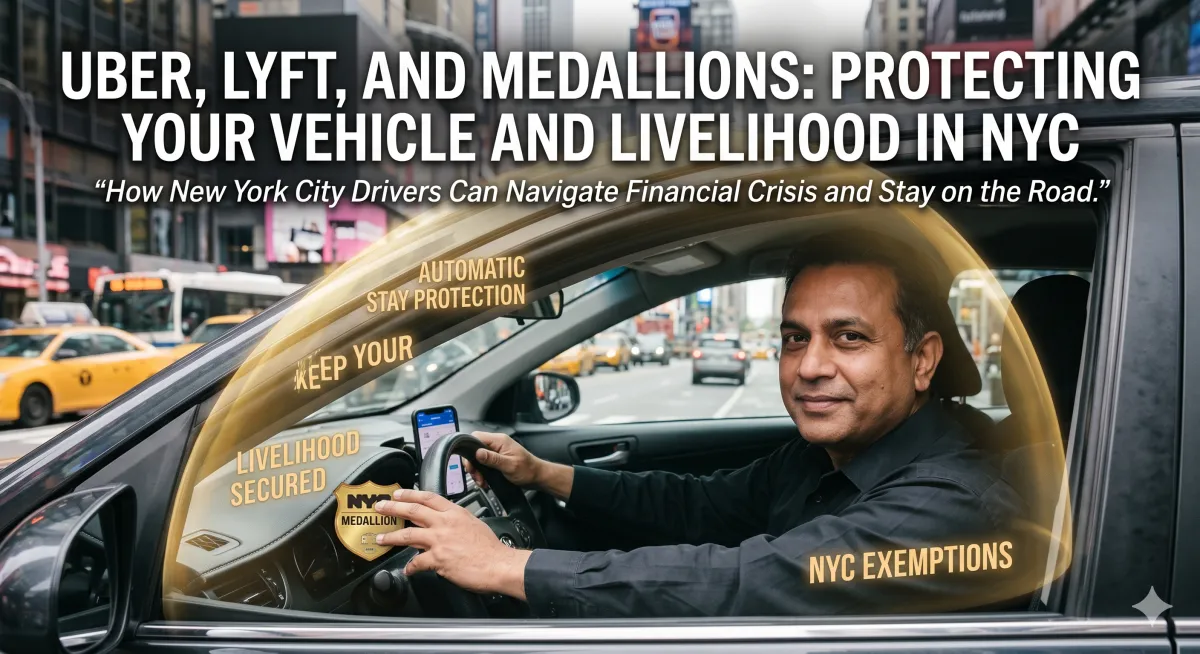
Uber, Lyft, and Medallions: Protecting Your Vehicle and Livelihood in NYC
For rideshare drivers and medallion owners in New York City, a financial crisis is not just about debt, It’s about livelihood. Your vehicle, your license, and your ability to earn income are often directly tied to your financial survival.
When debt becomes overwhelming, bankruptcy can offer protection. The key question is: Can you keep working while you resolve your financial situation? In many cases, the answer is yes.
Your Vehicle Is Often Protected—But It Depends on How It’s Used
In bankruptcy, a vehicle used for work is typically treated differently from personal-use property.
If you drive for Uber or Lyft, or rely on a medallion vehicle, your car may be:
Protected under applicable exemptions
Treated as a necessary business tool
Subject to equity limits rather than full liquidation
What matters most is the equity in the vehicle and whether it falls within New York’s exemption thresholds.
Chapter 7: Quick Relief, But Asset Sensitivity Matters
In Chapter 7 bankruptcy:
Unsecured debts can be discharged quickly
A trustee reviews non-exempt assets for potential liquidation
Essential work vehicles are often protected if properly exempted
For rideshare drivers, a properly structured filing can allow you to keep your car and continue working, especially if equity is low or covered by exemptions.
However, high-value or fully owned vehicles may face closer scrutiny.
Chapter 13: Protecting Income and Catching Up on Debt
For drivers with significant arrears or higher asset exposure, Chapter 13 may be more strategic.
It allows you to:
Keep your vehicle and continue operating
Repay missed obligations over time
Protect income while reorganizing debt
This is especially relevant for medallion owners or drivers with financing tied directly to their vehicle.
Medallion Debt: A Unique Financial Pressure in NYC
Taxi medallions in New York represent one of the most complex financial issues in transportation-related bankruptcy cases. Many owners are dealing with:
High secured debt tied to medallion loans
Declining market value
Ongoing income disruption
Bankruptcy can provide structured relief, but the treatment of medallion debt depends heavily on whether it is classified as secured, undersecured, or eligible for restructuring.
The Automatic Stay: Immediate Protection for Drivers
Once a bankruptcy is filed, the automatic stay immediately:
Stops repossession efforts on vehicles
Halts collection actions
Temporarily prevents enforcement of judgments
For drivers facing imminent vehicle loss, this protection can be critical in maintaining income continuity.
The Core Goal: Protecting Your Ability to Earn
Unlike traditional consumer debt cases, rideshare and medallion-related bankruptcies focus heavily on one priority: preserving income-generating assets.
Courts generally recognize that:
A vehicle used for work is not a luxury asset
Losing transportation can eliminate earning capacity
Financial recovery depends on maintaining operational ability
This is why many drivers are able to restructure debt without losing their livelihood.
Final Takeaway
If you drive for Uber, Lyft, or own a medallion in NYC, bankruptcy is not just about debt relief, it’s about protecting your ability to work. With the right strategy, your vehicle and income stream may remain intact while you regain financial stability.
Call The Law Firm of Howard Williams now at +1 (206) 260-0835.
